7 Common Mistakes New Traders Make in Volatile Markets

Volatility flatters activity. When an index moves two percent before lunch, every decision starts to feel urgent, and urgency feels a lot like skill. Then the statement arrives at the end of the month and tells a different story.
The mistakes below are not exotic. They are the ordinary ones, repeated under pressure, and together they usually cost more than any single bad call. Fixing two or three of them will do more for your returns than finding a better indicator.
1. Overtrading a Tape That Rewards Patience
In a quiet market, a clean setup might appear twice a week. In a volatile one, every fifth candle looks like one. Screens refresh faster, spreads widen, and each click costs something: commission, spread, and a slice of your attention.
Set a hard cap before the open. For most discretionary traders, three to five trades a day is plenty. Count only the trades that met your written criteria. If you took fourteen trades and three matched your checklist, you did not trade eleven extra times — you paid eleven extra tolls.
The same trap appears on your charts. Dropping from a daily or hourly view to a one-minute chart during turbulence multiplies the number of signals without improving their quality. If you cannot explain why a setup is valid on the higher timeframe, the lower one is just noise with a countdown.
2. Chasing Headlines After the Move
By the time a story reaches you, the first move is often finished or already reversing. Headlines are written to describe what happened, not to tell you what happens next, and in fast markets the numbers behind them are frequently revised.
Try a deliberate delay. Give a surprise headline ten or fifteen minutes, then look at where price sits relative to the day's range. The useful question is not what the news said, but what the market did with it. A sharp selloff that gets bought back inside an hour tells you more than the headline itself.
And a simple filter: if you did not have a plan before the headline, you do not have a trade after it. Watching is a position.
3. Ignoring Position Sizing
This is the mistake that ends accounts. Sizing is not about how much money you have; it is about how far away your invalidation point sits. The arithmetic is short:
- Decide the maximum you will risk on the trade — one percent of the account is a common, sensible ceiling.
- Measure the distance from entry to your stop, in points or in currency.
- Divide the first by the second. That is your size.
On a €20,000 account risking €200, a stop forty points away gives you a size of five units per point. If volatility doubles and the same setup now needs an eighty-point stop, your size halves to 2.5. Keep the risk constant and let the size flex.
The common error is the reverse: keeping size constant and widening the stop, which silently doubles your exposure. Most damaged accounts are not the result of one catastrophic idea. They are the result of an ordinary idea held at three times the appropriate size.
4. Moving Stop Losses Away From Price
A stop marks the price at which your reason for the trade no longer holds. Dragging it lower is a way of pretending the reason changed when, in truth, the loss has simply become uncomfortable.
A stop you intend to move is not a stop. It is a hope with a price attached.
Two things are worth knowing. First, if your stop feels too tight, the problem is usually your size, not your stop — reduce the position instead. Second, stop orders can slip in fast markets or gap straight through, so a stop is a risk control rather than a guarantee. Size for the slippage you might get, not the fill you would like.
If you catch yourself dragging the line, close the position. Re-entering later is cheap. Hoping is not.
5. Averaging Down on a Loser
Adding to a falling position improves your average price and worsens everything else: your exposure, your stress, and your exit options. It is the trade that turns a bad afternoon into a bad quarter.
Decide the maximum size you will ever hold before the first entry, not after the third. Adding is legitimate when price has moved in your favour and your plan allowed for scaling, or when you designed a staged entry in advance with total risk fixed. It is not legitimate when the only argument is that the price looks cheaper now. A position below your invalidation level is not a discount; it is evidence you were wrong.
6. Revenge Trading
The trade after a loss is often the worst of the day, because it is placed to recover a feeling rather than to express an edge. Volatile sessions produce losses quickly, which means they also produce the urge to fix them quickly.
Write down a daily loss limit — two percent of the account, or three times your per-trade risk — and treat it as a circuit breaker. When you hit it, close the platform. After two consecutive losses, halve your size until the next session. Keep a short note of what happened, in plain language, while it still stings.
Losses are the cost of doing business. Paying twice for the same one is a choice.
7. Rewriting the Rules Mid-Session
Plans made before the open are calm. Decisions made mid-afternoon, four candles into a spike, are not. The most common version of this mistake is quietly raising a target because momentum looks strong, or widening a limit because the trade is "so close". The second most common is the opposite: cutting a perfectly good position because a headline made you nervous.
One good trade is not evidence of a new method, and one scary hour is not evidence that your plan is broken. Change rules between sessions, in writing, with a reason you can test later. Mid-trade improvisation is how a system becomes a series of moods.
A Short Checklist for Turbulent Sessions
- Before the open, write your maximum number of trades, your daily loss limit, and a one-line reason for any position you plan to take.
- Size every position from the stop distance, never from what feels affordable.
- Let the first reaction to a headline finish before you act on it.
- If you want to move a stop, close the trade instead.
- Stop for the day when you reach your loss limit. No renegotiating.
- Review the session in six lines: what you planned, what you did, where the two diverged.
None of this requires a better forecast. Volatile markets do not reward the trader with the sharpest opinion; they reward the one who has already decided what they will do when the tape gets loud. Pick two items from the list above, apply them for a month, and measure the difference in your equity curve rather than your memory.
This is general educational information, not personal investment advice. If your circumstances are complex, speak with a licensed financial adviser before changing how you manage real capital.
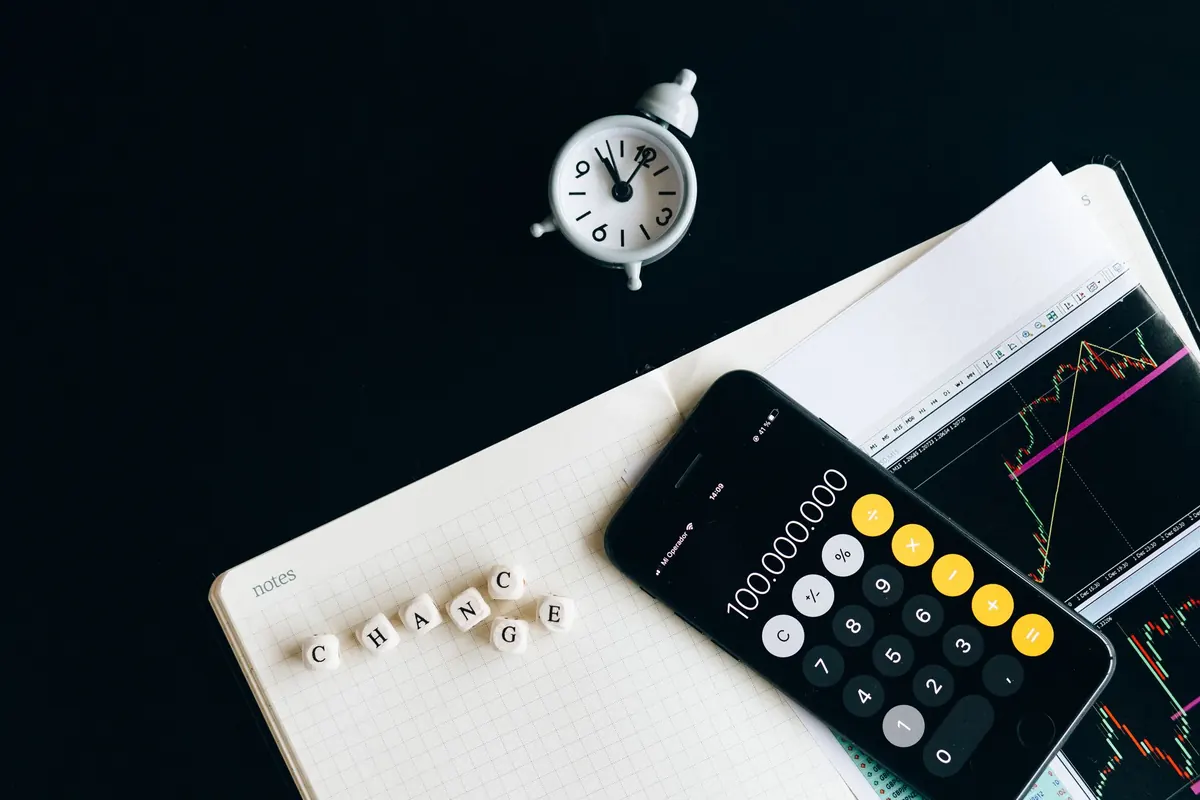
Photo: AlphaTradeZone / Pexels